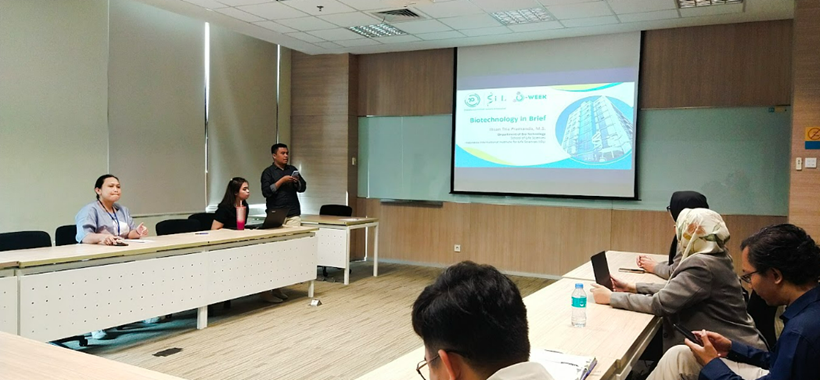
The Biotechnology Study Program, Department of Applied Science, Faculty of Mathematics and Natural Sciences, Universitas Negeri Malang, has made a visit to benchmark the international class curriculum with the Biotechnology Undergraduate Program, School of Life Science, Indonesia International Institute for Life Science (I3L) on Tuesday, May 7th 2024, in Jakarta. This activity supports SDGs Points 4, 8, and 17.
This activity began with a curriculum presentation from the head of the Biotechnology undergraduate program, Ihsan Tria Pramanda S.Si., M.Sc., followed by an introduction to the representatives from I3L who were present, namely the Dean of the School of Life Science, apt. Pietradewi Hartrianti, M.Farm., Ph.D., Biotechnology Lecturer Dr. Riahna BR Kembaren, S.Si., M.Sc., and also Vice Rector I Academic Affairs Elizabeth Sidhartha, B.Sc., M.Sc. The curriculum presentation is related to the explanation of each subject taught in the Biotechnology undergraduate program, School of Life Science, I3L, from semester 1 to semester 8.
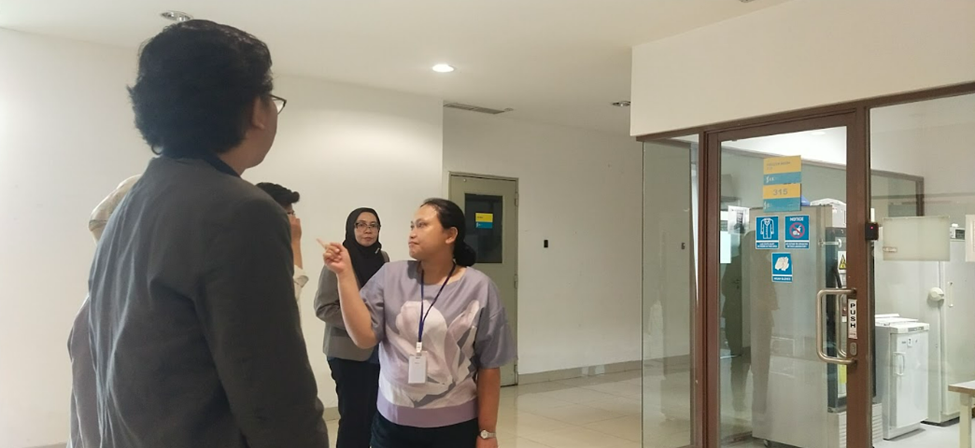
Next, an introduction from the lecturers teaching the Biotechnology Study Program, Faculty of Mathematics and Natural Sciences, Universitas Negeri Malang, represented by the Head of Department Applied Science and also the Coordinator of the Biotechnology Study Program, Prof. Dr. Evi Susanti., M.Si. The activity continued with a brief presentation and introduction about the Biotechnology Study Program at Universitas Negeri Malang. Discussion activities related to the subject and teaching content. At the end of the activity, we were invited to tour laboratories such as the Pilot Plant Laboratory, Analytical Chemistry II, Food Technology and Food Science and Nutrition, Molecular Biology, General Chemistry, Microbiology, Cell Culture, Sensory Laboratory, and finally the Teaching Lab, which can accommodate 150 students. This benchmarking activity really supports the creation of quality education improvements so that biotechnology graduates are absorbed by employment opportunities, get decent jobs, and increase economic growth.