
The results of the Global World Digital Competitiveness research show that digital literacy skills in Indonesia are ranked 56 out of 63 countries studied. The low level of digital literacy is due to a lack of awareness from the public about digital information. It is easy for the public to believe information disseminated in digital media without verifying its veracity first. These problems make Dr. Primardiana Hermilia Wijayati, M.Pd, a German language lecturer at the State University of Malang, develop a digital literacy assessment model for elementary, middle, and high school levels, especially at grades 2,4,8,11. The digital literacy assessment model created by Dr. Primardiana Hermilia Wijayati, M.Pd and the team was tested in nine schools in Malang City and District, Kediri, Blitar, Sidoarjo, Batu City, and Surabaya. The research was conducted for five months, from July 2021 to November 2021. The research objectives were to obtain a digital literacy assessment framework, formulate a digital literacy assessment learning progression, produce a prototype of digital literacy assessment questions, and produce a prototype web-based digital literacy assessment information system.
Dr. Primardiana Hermilia Wijayati, M.Pd explained that the development of digital literacy assessment activities was based on three stages: Basic Research, Applied Research, and Development. These three stages became the basis for the team to develop a web-based digital literacy assessment model based on the digital literacy framework and learning progression assessment. The digital literacy assessment model was piloted in nine schools to obtain relevant results and determine how digital literacy is for students. The implementation of digital literacy assessments is assisted by a proctor and supervisor and supervised by the Principal.
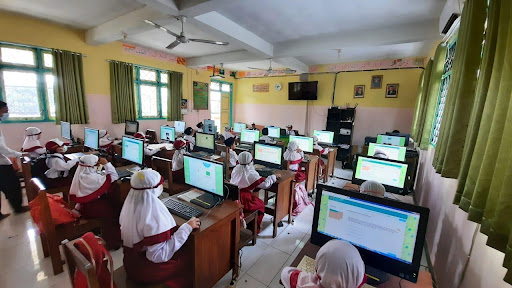
The digital literacy assessment model created by Dr. Primardiana Hermilia Wijayati, M.Pd and the team showed that the digital literacy of students in nine schools was quite good. However, there were still many students who did not still have limitations in some aspects, such as digital security and ethics. It is hoped that the digital literacy assessment model will positively contribute to students' digital literacy in schools. Moreover, it can improve students' competence in understanding, determining and evaluating developing information so that students are not easily fooled by the information that exists in cyberspace.


